|
 |
 |
 |
 |
 |
 |

On
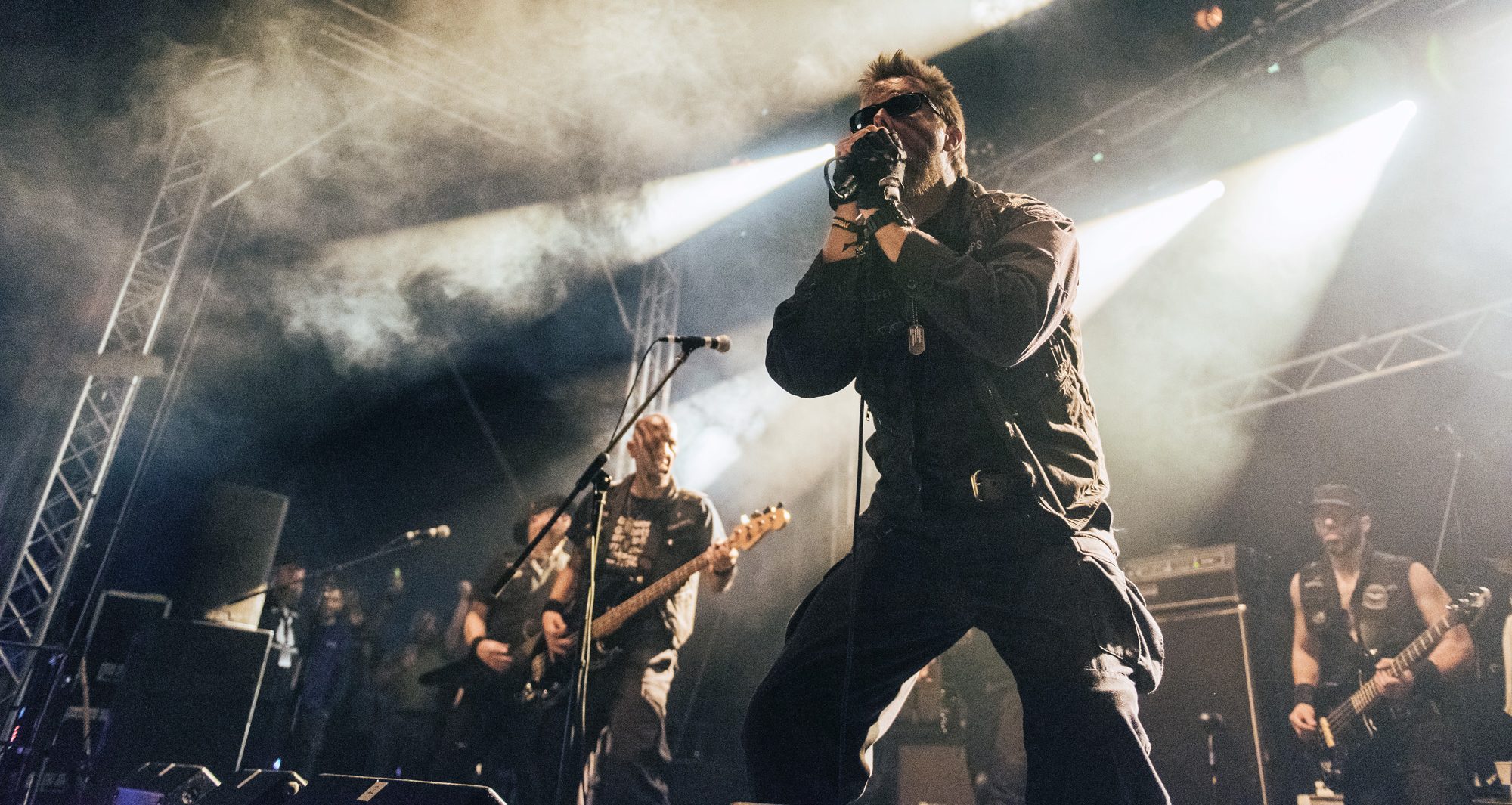
the evening of July 30, 1989, four young men got on stage for a local music competition in Graz, Austria. A crowd of 14 came to see what
the local jungen had to offer, not realizing that the band had just gone AWOL from the Austrian Army to enter the event. What they saw was unlike anything
they could have imagined. Twenty minutes into the performance, the
crowd realized that this was no sound-check, this was the music.
Of
the 14 patrons, 6 stayed for the duration of the show. Understandably, those who left may have been frightened by the band's appearance. With no time to change into civilian clothes before taking the stage, their military uniform was authoritive and intimidating. What the audience
heard, when they listened beyond the thrashing guitars and gunfire
drums, was a troop of young men celebrating stories of ancient times. The lyrics
echoed a pride of a pre-imperial heritage rarely heard in music outside of a few secluded communities in the Austrian Alps. The songs retold stories
of lore, of times long ago, when Arno still meant a great deal to
a great many, much more than simply the name of a torrent river in neighboring Italy. These patrons were being given a lesson in history
and mythology in a way that they had never heard. Their heads bobbed
to the story
of the gypsy king who hid his life as a warrior from his queen,
who meanwhile was seeking adventure from another man. There was
the tale
of the ancient ones exploring mysteries of Mars and their struggle
to create a breathable atmosphere there, this tale predating Jules
Verne by thousands of years. There was the song about the Illyrians'
most famous knight, Hans the Terminator,
who history claims to have single-handedly protected his land from
Celtic invaders in the year 399 B.C. by implementing extreme force
and heartless brutality (the surviving invaders returned to their
country with tales of a man who killed without emotion and, despite
the increasing number of wounds he received, seemed unstoppable
and impervious to pain).
After
the band's final song, there were no applause. The audience had
glimpsed something wonderful and new and was too awed to react.
All they knew was that they wanted to tell everyone they met about
the music called ArnoCore, performed by a band calling themselves...
ArnoCorps.
Word
soon spread about the foursome and a following sprang up in villages
and cities throughout Austria. Many, like the band members themselves,
were disillusioned with modern society, its government's lack of
interest in its people, and the fascist mentality their parents
had bought into. By retelling stories from a long forgotten time,
ArnoCorps had hoped to overcome this state, and it seems they began
to by persuading a few of their dissatisfied peers to emerge out
of the bourgeois discos and join the Corps. The power of Arno was
resurging, and they could feel it.
Next:
Tragedy Hits
|
 |
 |
 |
 |
 |
 |
 |